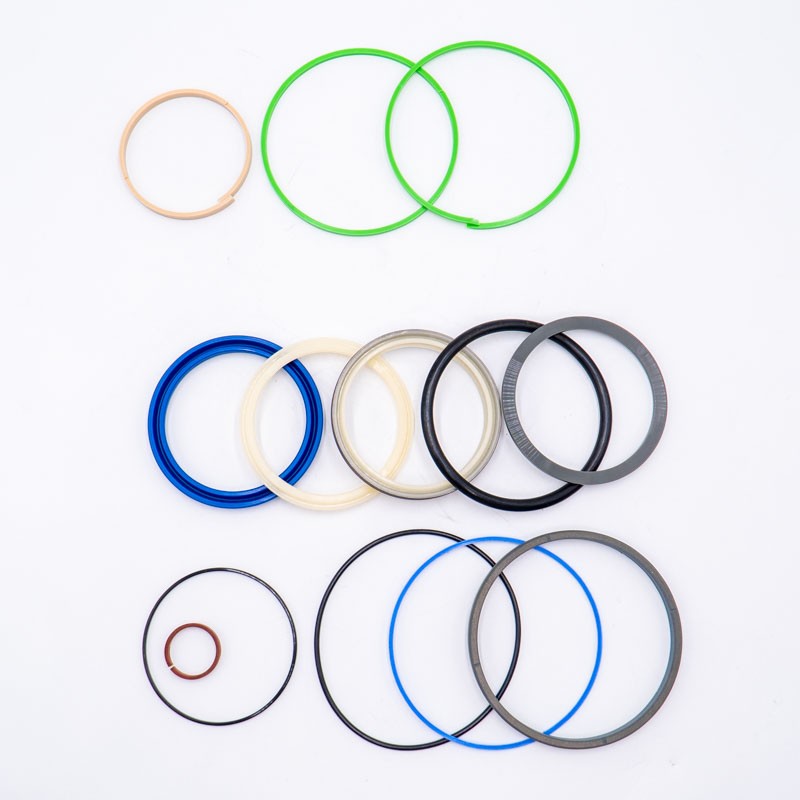
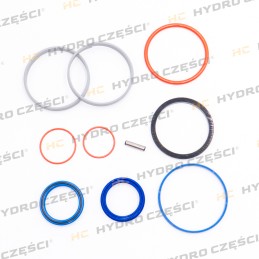
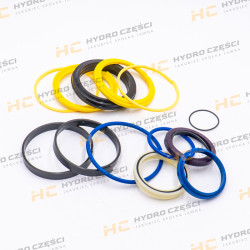
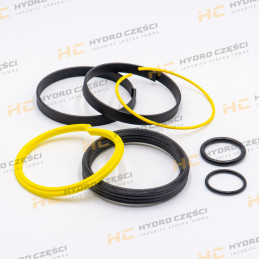
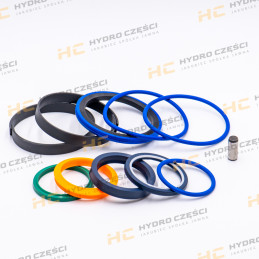
DIPPER Cylinder Seal Kit 80x115mm (fits JCB) - GMOVE LQU0125
High-quality dipper arm cylinder seal kit by GMOVE, designed for cylinders with an inner bore of 115 mm and a rod diameter of 80 mm. This kit is designed specifically for JCB tracked and wheeled excavators. The dipper cylinder performs the heaviest work during material excavation and pulling the bucket towards the machine. The use of precisely manufactured seals made from modern elastomers and polyurethanes restores the cylinder's full hydraulic efficiency, eliminates oil leaks, and prevents the arm from drifting under load.
High pressure and mechanical resistance: The kit contains wipers, wear rings, and piston and gland seals resistant to extreme pressure spikes. The materials used by GMOVE are characterized by very high abrasion resistance, which effectively protects the inside of the cylinder against the ingress of sand, dust, and water particles when working in harsh ground conditions.
Technical Specification:
- Part type: Dipper arm cylinder seal kit.
- Quality class: OEM
- Rod diameter: 80 mm.
- Cylinder bore: 115 mm.
- Manufacturer/Brand: GMOVE.
- Part number: LQU0125.
Compatibility with JCB Machinery:
| Machine Category | Series and Models |
|---|
| Tracked Excavators |
JS Series (Tracked): JS 130 SERIES, JS130 (1995 - 1995) |
| Wheeled Excavators |
JS Series (Wheeled): JS 130 SERIES WHEELED, JS130W R3, JS130W [T0/T2 Isuzu] (1996 - 2008) |
Workshop Tip: Leaking oil not only pollutes the environment but primarily means a drop in digging force and a loss of precision in attachment control. Ignoring minor leaks eventually leads to dirt entering the system and causing permanent damage to the control valves and the hydraulic pump.
Golden rules for cylinder seal replacement:
1. Cleaning and diagnostics: Before installing any seal, thoroughly clean the inside of the cylinder tube and the gland. Check the piston rod for micro-cracks, scratches, or chipped chrome. Installing a new GMOVE kit over damaged chrome is pointless – the seal will be cut immediately.
2. Clean workspace: Perform repairs in a clean area, away from grinders and dust. Use only soft plastic mounting tools to avoid nicking the sealing lips when pressing them into the grooves.
3. Initial lubrication: Before inserting the piston rod back into the cylinder, generously lubricate all new seals with clean hydraulic oil. This will prevent them from rolling over or burning during the initial dry movements.



.png)