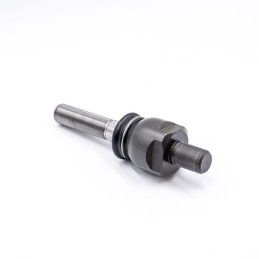
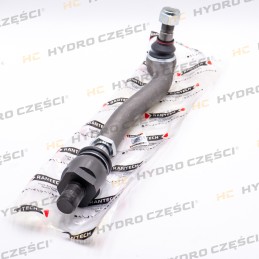
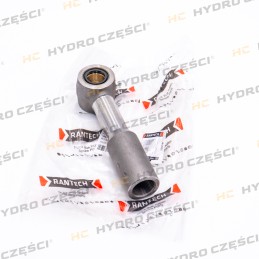
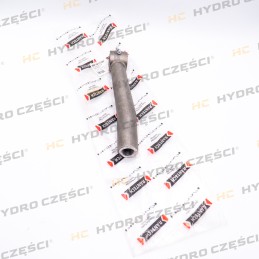
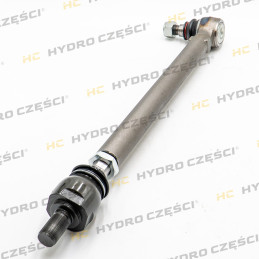
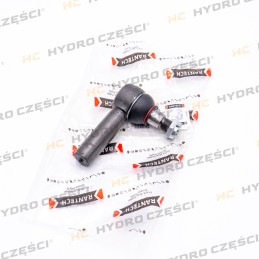
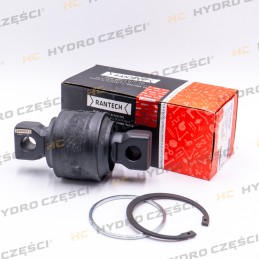
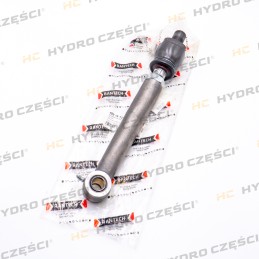
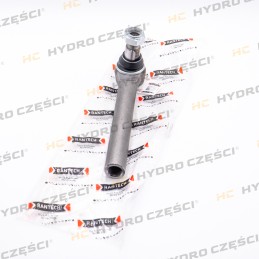
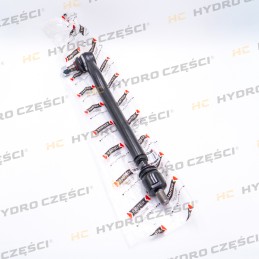
Left Tie Rod Assembly LH 570mm (fits CAT) - RANTECH 9R-2842
Complete left tie rod assembly LH by RANTECH with part number 9R-2842. This component is designed for popular CAT (Caterpillar) backhoe loaders. The tie rod is a key element of the machine's steering system, responsible for reliably transferring force from the steering cylinder directly to the steering knuckles. The use of a precisely manufactured, complete RANTECH tie rod eliminates dangerous play, ensures perfect response to steering wheel movements, and guarantees safe machine handling even in the toughest terrain conditions.
Maximum durability and safety: Complete RANTECH tie rods are manufactured from thick steel pipe (Ø 36 mm), providing extreme resistance to buckling and bending when operating on uneven, muddy terrain with a full bucket. Hardened ball studs guarantee smooth operation, and high-quality dust boots perfectly protect the interior of the joints against the destructive effects of water, mud, and sand.
Technical Specification:
- Part type: Complete tie rod assembly.
- Mounting side: Left (Left Hand - LH).
- Total length (L1): 570 mm.
- Pipe diameter (G1): 36 mm.
- Cone diameters (d1 / d2): 23.5 mm / 26.5 mm.
- Cone taper (A1): 1/10.
- Ball stud thread (J1): M20x1.5 RHT (right-hand thread).
- Internal threads (B1 / B2): M24x1.5 RHT / M22x1.5 RHT (right-hand threads).
- Manufacturer/Brand: RANTECH.
- Part number: 9R-2842 (9R2842).
Compatibility with CAT Machinery:
| Machine Category | Series and Models |
|---|
| Backhoe Loaders |
416, 416B, 426, 426B, 428, 428B, 436, 436B, 438, 438B |
Workshop Tip: In backhoe loaders, the front axle is heavily loaded, especially when driving with material in the front bucket. Even the smallest play on the tie rod pins translates into uncontrolled wandering of the machine on the road and leads to drastic, uneven wear of the front tires.
Golden rules for tie rod replacement:
1. Alignment adjustment (toe-in/toe-out): This is an absolute priority. Replacing a tie rod requires remeasuring and adjusting the wheel alignment. Attempting to adjust it "by eye" or by counting the threads of the old one almost always ends in tire damage and additional load on the entire system.
2. Proper cone installation: The steering knuckle sockets must be perfectly clean and degreased before inserting new studs. Remember to use only a torque wrench to tighten the castle nuts (not an impact wrench!), to avoid stripping the thread and damaging the interior of the new joint.
3. Securing the mechanism: Always use new securing cotter pins on the castle nuts. The jam nuts on the tie rod pipe must be tightly and securely tightened to prevent the length from misadjusting due to the powerful vibrations generated during operation.